Enjoying my couch
I love watching documentaries. In general, I’d rather watch a documentary than a fiction feature. Documentaries about sports (of course), social causes, music, family, true crime, etc., you name it. I guess it’s the history major in me. It’s a big reason we have Netflix and the only reason I look forward to the Tribeca Film Festival each year (their movie selection pretty much stinks, but they always have great documentaries). With the colder weather coming through New York and my reduced training time combining to provide extra couch time, I’ve seen three good documentaries recently that I want to recommend:
“Bigger Stronger Faster*” is fun. If you’re in the mood for a good sports (though not running or multi-sport) documentary, “Bigger, Stronger, Faster” is an interesting portrayal of power-lifters, body-builders and other athletes, steroid users and clean. It will make you laugh and probably cause you to 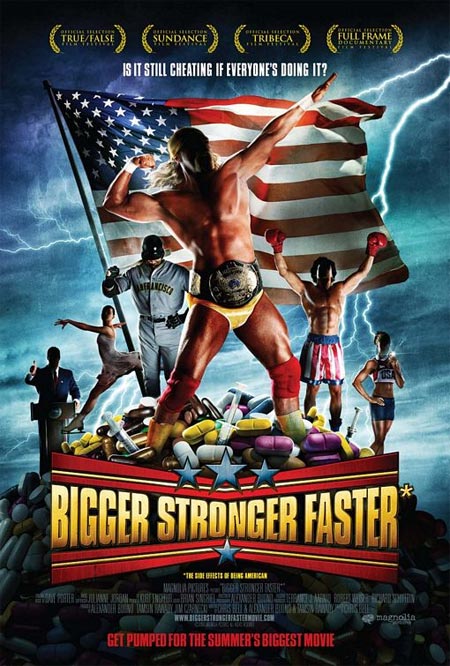 re-think some of your notions about steroids and doping. The movie is written and directed by Chris Bell. He and his family also play a prominent role in the film. Bell and each of his brothers grew up idolizing Arnold Schwarzenegger and have each been power-lifters and steroid users. At the time of the movie, at least one of his brothers still used steroids. That’s the background he’s coming from, but I didn’t feel like he was too biased either for or against steroids or other performance enhancers. His primary point is that we have to think about the issue a little more deeply and question the media blitz that makes it very clear that steroids are bad – bad for competition, bad for your health, bad for our youth. Bell narrates the movie in an engaging, funny manner. He asks good questions and speaks with interesting scientists, policy-makers and pro- and anti-steroid advocates. One of the primary themes of the movie is the mixed message athletes (kids and adults) receive – you have to strive to be your very best but watch out how you accomplish that goal; some “performance enhancers” such as supplements, altitude chambers, LASIK surgery and certain drugs are fine, others, such as anabolic steroids and blood doping (perhaps somewhat arbitrarily) are not. Bell is also very critical of the mostly unregulated, but legal, supplement industry. One of the best parts of the movie is Bell’s great expose of the creation of supplement ads with the amazing “before” and “after” pictures. Robo, this one is especially for you!
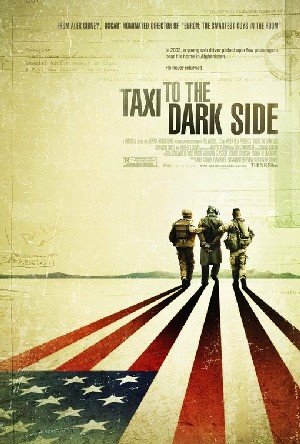 “Taxi to the Dark Side” is not a movie to watch on a relaxing Friday night. It’s tough to watch, but you need to see it. “Taxi” is built around the story of a young Afghan taxi driver who was beaten to death by American soldiers while being held at Bagram Air Base for a crime that he didn’t commit. It exposes the torture and abuse the American military, government and CIA employ, excuse and endorse (implicitly or explicitly) in the “War on Terror”. It’s disgusting and disturbing. The movie won the Oscar for Best Documentary Feature earlier this year and writer and director Alex Gibney gave a brief, but memorable speech with a plea to move the US “away from the dark side and back to the light.” The one ray of hope from watching the movie today instead of when it was in the theater is that hopefully the new administration won’t let the violations of human rights, law and common decency featured in this movie continue.
“Spirit of the Marathon” was good, but not as good as I’d hoped. The movie got some press (in the endurance sport community at least) when they had a couple “one time only” sneak previews in running hubs around the country earlier this year. “Spirit of the Marathon” tells the story of about six runners (two pros and four amateurs) as they prepare for and run in the 2005 Chicago Marathon. 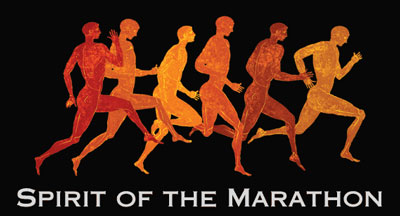 The movie mostly is about what it takes to get to the starting line of a marathon – for first timers and seasoned veterans alike. It also goes into the history of the marathon, the rise of Boston as the premier US marathon and the dominance of Kenyan distance runners. My main problem with the movie is that I didn’t find any of the stories about the amateurs all that interesting or inspiring. That’s not to say that they don’t have great stories (they definitely do), but I just didn’t feel like their stories were told all that well. Even though it is a pretty honest depiction of the blurry, early mornings and tired bodies, I didn’t get a good sense of their struggles or their successes. I wanted to be more excited for them at the finish line, but didn’t feel invested in their achievement. Making up for that is the story of Deena Castor, who won the bronze medal at the Athens Olympics and held the American women’s marathon record, but had never actually won a marathon. I won’t spoil the ending, but her race against the reigning Chicago champion, Constantina Tomescu-Dita, is a very exciting one. The filmmakers also have some great historical marathon footage and interviews with some top marathoners from the last 30 years.
Swim – December 4
Distance: 1,550 yards
Time: 30 minutes
Strength – December 5
Treadmill run – December 5
Distance: 1.1 miles
Time: 10 minutes
Swim – December 6
Distance: 1,900 yards
Time: 38 minutes
Strength – December 6
Indoor ride – December 7
Time: 1:00
i’m not sure i could watch the taxi movie…
did you ever get to see Dean K’s movie about the 50 marathons? pretty cool!